
-
What’s the purpose of Solar Panels? Solar panels collect the sun’s energy and store it in your auxiliary battery/batteries.
Auxiliary batteries are standard with Sportsmobile’s Standard Equipment Package. The energy stored from solar panels is the same as when you run your van’s engine to have the van’s alternator charge your batteries. Or, when you are connected to a 110V hook-up or generator, your power converter/battery charger will keep your auxiliary batteries charged.
Do You Need Solar Panels? The question is, “Will you be camping for a long period of time, three to four days or longer, without starting the van’s engine or plugging into a 110V hook-up to charge the batteries?” If yes, figure out amp usage per day and the time parked in the sun. Then we can install the right size system for your needs. See amp usage below.
Keep in mind: When driving or plugged into a 110 volt hook-up or running generator, your solar panel is not charging the battery. However, your van’s alternator or power converter/battery charger is. The panels are for recharging when you do not have a 110 volt hook-up or generator. In shade, panels are not producing much power, if any.
-

We sometimes camp for a week or so without a hookup. Our two panels take care of our needs very well. — David and Julia Olsen
-
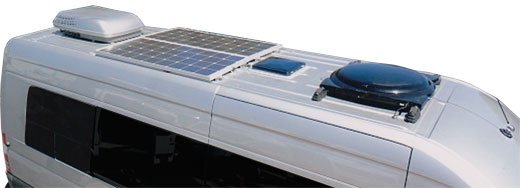
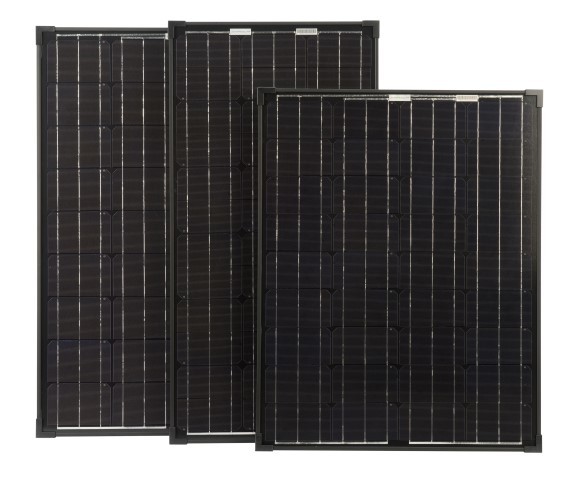
Solar Panel technology is changing rapidly. Photos show examples. Please contact Sportsmobile for latest wattage, dimensions, weights and colors.
-
Warranty Standard 20 year power output warranty and 5 year workmanship warranty applies in USA. Standard 20 year power output warranty and 2 year workmanship warranty applies outside of USA. Refer to warranty policy for details.
-
One Solar Panel: will pretty well take care of an electric refrigerator.
Two Solar Panels: will normally take care of your refrigerator and provide plenty of power for 12V lights, water pump, attic fan, etc. Solar panels include an advanced designed Solar Controller and control panel (see below).
-
How many panels can be installed?
RB Vans
- No attic fan or A/C – 4
- With attic fan and A/C – 2
- With attic fan, no A/C – 3
-
EB Vans
- No attic fan or A/C – 5
- With attic fan and A/C – 3
- With attic fan, no A/C – 4
-
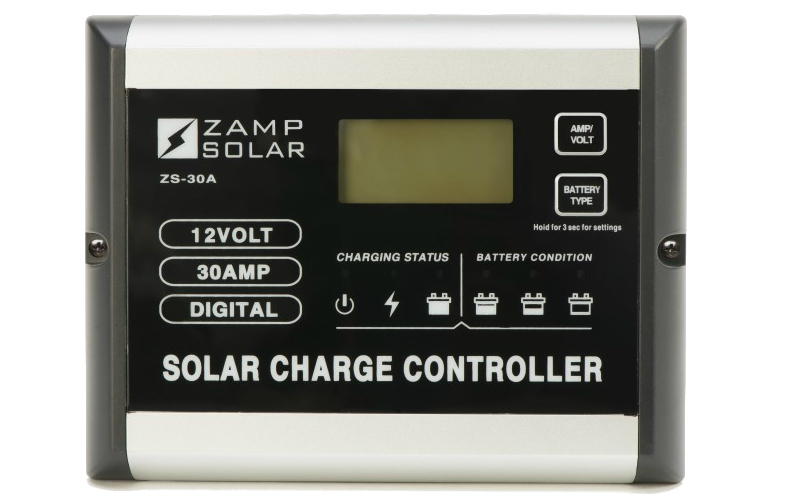
30 Amp 5 Stage PWM Digital Deluxe Solar Charge Controller – ZS-30A
Our ZS-30A is an indoor solar charge controller for up to 510 watts packed full of features.
30 Amps is large enough for up to 510 Watts of 12 volt solar charging power. Each controller has PWM (Pulse Width Modulation) and 5 stages of charging for best battery health and longevity. Two mounting options, flush or surface, provide options and flexibility. Each Zamp Solar 30A solar charge controller supports, and is programmable for the 4 typical types of deep cycle batteries – WET, GET, AGM and Calcium.
LCD Screen
We’ve added an LCD screen that directly displays battery voltage, charging current, charging capacity (Amp Hour), battery types and faulty codes.
LED Colored Indicator Lights
You asked for it and we delivered. 6 colored LED indicator lights that indicate the current charging status as well as the current battery condition.
5 Stage of Charging Algorithm
The solar charge controller is the brain of the solar system. Without a brain your batteries are like Zombies and have nothing to help them stay healthy and alive.
Temperature Sensor for Battery
As an option, the unit provides a port to connect the external battery temperature sensor. If the batter temp. sensor is connected the unit will optimize the charging performance based off the battery temp detected and provide over-temperature protection. In some cases if battery over-temperature occurs the Digital Deluxe Solar Charge Controller will automatically stop charging.
Remote Switch
The ability to remotely display the LCD screen. Currently we do not utilize this port but have it for future technology advancement.
Our Digital Deluxe Solar Charge Controller will accept a DC charge of between 10 and 15 volts making it an optimal controller for 12 volt solar systems. The solar charge controller is the brain of a solar system and will protect your batteries, the power source, from damage. This ZS-30A was designed for indoor use only and should never be exposed to rain.
-
-
Pre-Wiring for Solar Panels
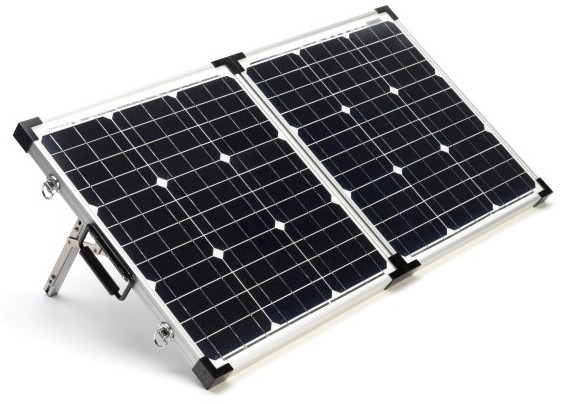
We can also pre-wire with a solar controller for customers who want to use a portable solar panel. We install a marine exterior 12 volt, 15 amp connection wired to a solar controller, then to the battery system. The panel can be mounted to the van’s roof or keep it portable so you can place it in the sun when you park in the shade.
-
How Many Amps Do I Need?
This is a difficult question to answer without knowing your typical daily 12-volt needs. See our typical 12/110V requirement examples below. Knowing how many amp hours you will be using in a 24 hour period is critical in knowing how large a solar system is needed.
Amp Usage:
- One panel will produce about (depending on variables) 5 amps per hour of 12 volt power.
- If you have 8 hours of sunlight, you will be able to put a max of 40 amp hours into your battery system.
- A 4 CF refrigerator uses 2.8 amps per hour when it’s running. Most refrigerators will run for about 16 hours (or 65%) in a 24 hour period. 16 hrs x 2.8 amps = 49 amps. This is average daily amp consumption of the refrigerator.
- If you put in 40 amps per day in the auxiliary battery and the refrigerator uses about 49 amps, you will have a negative battery charge of about 9 amps over 24 hours.
- Most customers like the security of a second solar panel, which will provide additional amps for 12V lights, water pump, TV, etc. Some order four panels.
Keep in mind: When driving or plugged into a 110 volt hook-up, your solar panels are not charging the auxiliary batteries. The panels are for recharging when you do not have a 110 volt hook-up or generator. If you park in the shade, the panels are not producing much power if any.
Also, solar panel output will vary with location, time and date as the sun’s angle changes. Note — product design can change.